CONCRETE SEALING & RE-SEALING
Two coats, the right product for the finish, rolled properly instead of sprayed thin to make a drum go further. It brings the colour back up and keeps water where it belongs — on top.
Decorative and plain concrete both want re-sealing every three to five years in this climate. Book it before the surface starts to chalk and it is a cheap day’s work; leave it a decade and you are paying for a resurface.
- Coats
- Two, rolled
- Interval
- Every 3–5 years
- On site
- Usually one day
What you get
DONE PROPERLY, START TO FINISH
We match the product to what is already down. Solvent over acrylic, water-based where fumes matter, penetrating sealers on exposed aggregate — using the wrong one is how driveways go cloudy.
- +Product matched to the existing finish
- +Pressure clean and strip back failed sealer first
- +Cracks and chips repaired before sealing
- +Two coats rolled to the right build, never sprayed thin
- +Non-slip additive available for wet areas and slopes
How the job runs
4 STAGES, WRITTEN INTO YOUR QUOTE
-
01
Clean & strip
Pressure clean, degrease and strip any failed or incompatible sealer.
-
02
Repair
Fill chips and cracks, spot-repair the surface so the seal sits flat.
-
03
First coat
First coat rolled to the correct build and left to cure properly.
-
04
Second coat
Second coat with non-slip where needed, then a walk-around with you.
Finishes and patterns
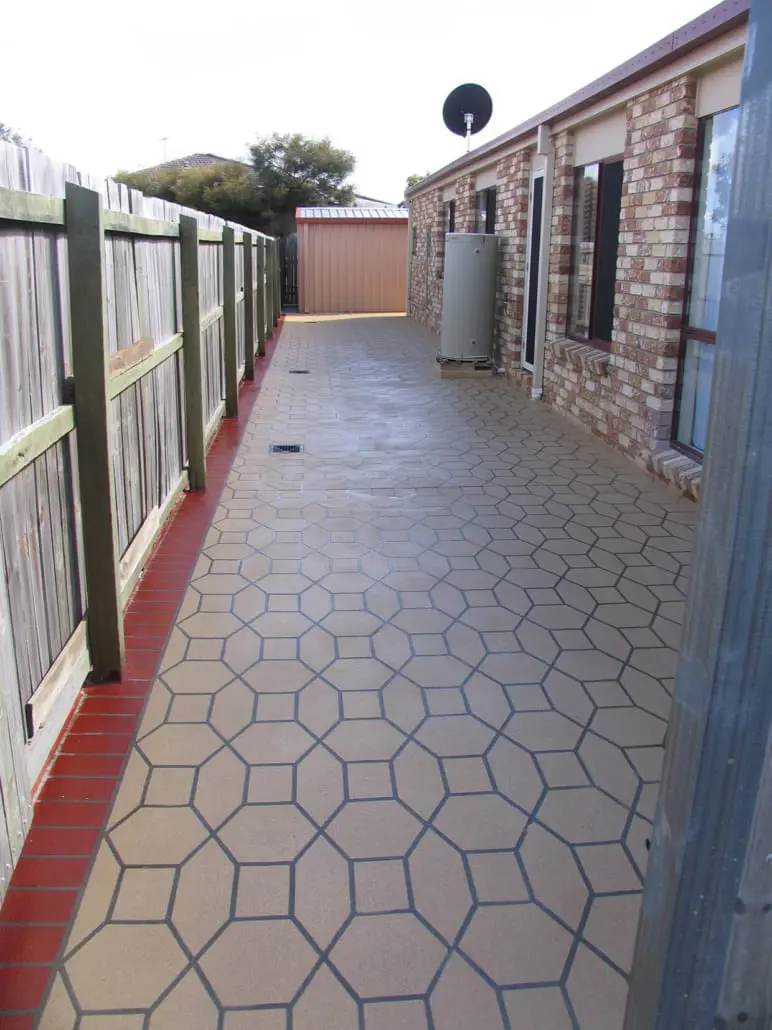
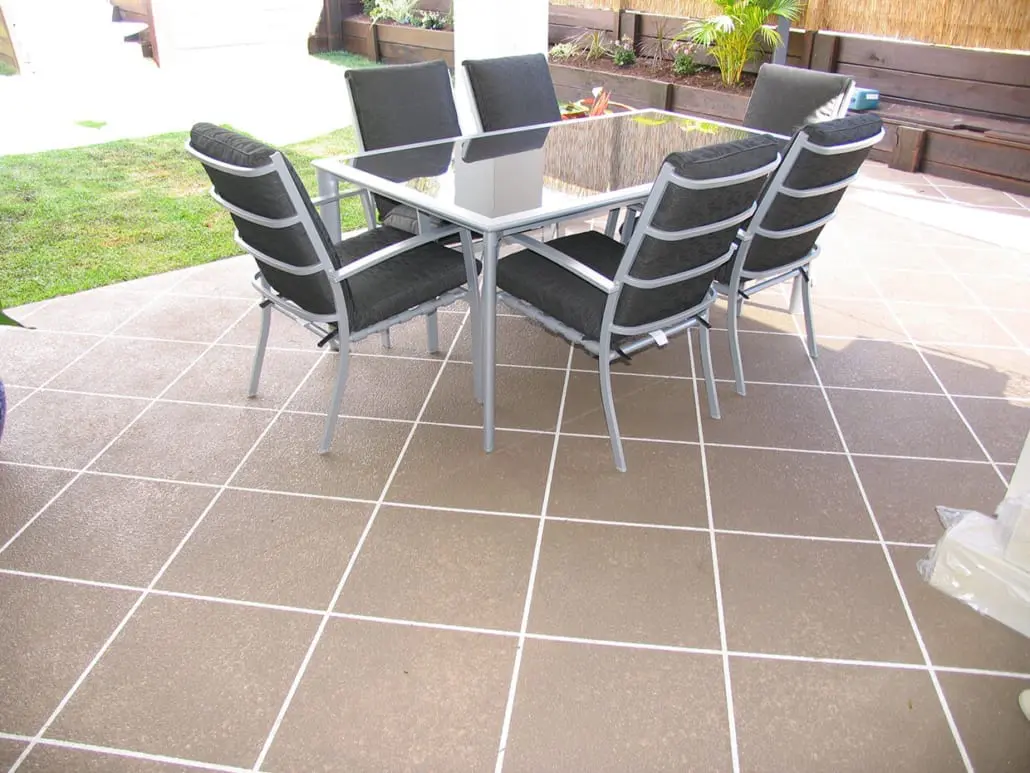
REAL JOBS, REAL FINISHES
Straight answers
SEALING & RE-SEALING QUESTIONS
The questions we get asked on the driveway about this one. Anything else, ring us — you will get a person.
ASK US — 0404 859 045
How often should concrete be re-sealed?
Every 3 to 5 years in Brisbane. Driveways in full sun and pool surrounds are at the short end of that, covered patios at the long end.
Can you seal over old sealer?
If it is compatible and still bonded, yes. If it is peeling, cloudy or a different chemistry, it gets stripped first — sealing over failed sealer just locks the problem in.
Will sealing make my concrete slippery?
A gloss sealer on a smooth slab can be, so we add a non-slip additive on slopes, steps and around pools. On textured and exposed aggregate surfaces it makes little difference.
Related
OFTEN QUOTED TOGETHER
FREE ON-SITE QUOTE. NO OBLIGATION.
Tell us what you have got and we will come and measure it. You get a written, itemised price with a start date on it — not a number over the phone that changes when we turn up.